
Inside WoodStampArt: three generations, one wooden block
The workshop behind the printing blocks we ship worldwide, the family that runs it, and how a single block goes from a rough offcut to something you can print with for years.
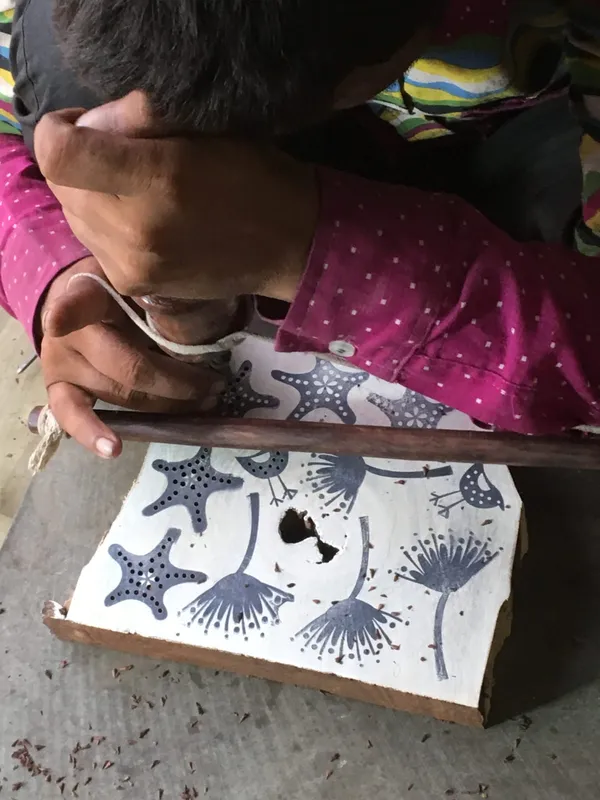
WoodStampArt was started by Ashish Rathore around something his family already knew how to do better than almost anyone: carving printing blocks out of wood, by hand, one at a time. The shop exists so that work reaches the people who actually want it, printers and potters and makers, instead of stopping at a wholesale counter.
We are the third generation of our family making these blocks. More than 50,000 designs have passed through the workshop to date. That number is not a boast about scale, it is the reason a new design rarely surprises us: whatever you are asking for, something close to it has probably been carved here before.
What a block actually is
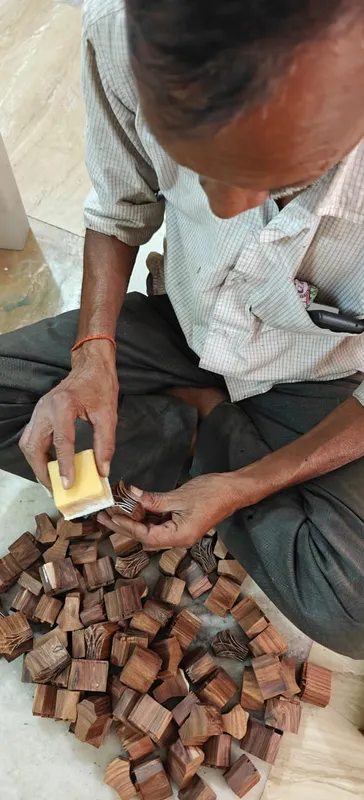
A printing block is a piece of seasoned hardwood with a design standing proud of its face. Ink or dye sits on the raised part. Press it onto cloth, clay, paper or leather and the design transfers. Nothing about it is complicated, which is exactly why the quality of the carving is the whole product. A shallow cut prints muddy. An uneven face prints in patches. A block cut properly prints cleanly for years.
How one gets made
- The wood is seasoned first, so the block does not warp once it meets water and dye.
- Blanks are cut and the printing face is levelled by hand until it is genuinely flat.
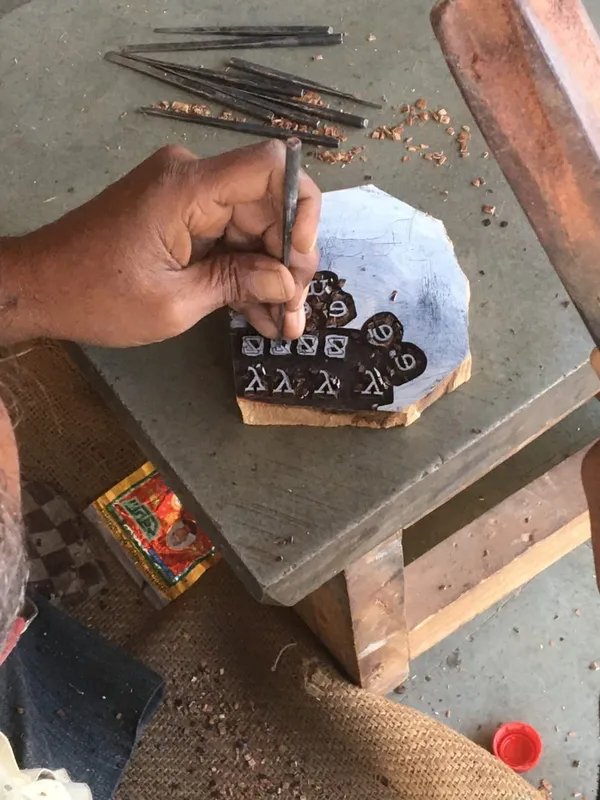
- The design is drawn straight onto the face.
- The carver cuts away everything that is not the design, working with chisels of decreasing size as the detail gets finer.
- The face is brushed out so no dust sits in the cuts and blurs the first print.
- The block is proofed on cloth. If it does not print cleanly, it does not ship.
The last two steps are the ones that get skipped when blocks are made in a hurry. They are also the ones you feel the first time you use it.
Why hand carved still matters
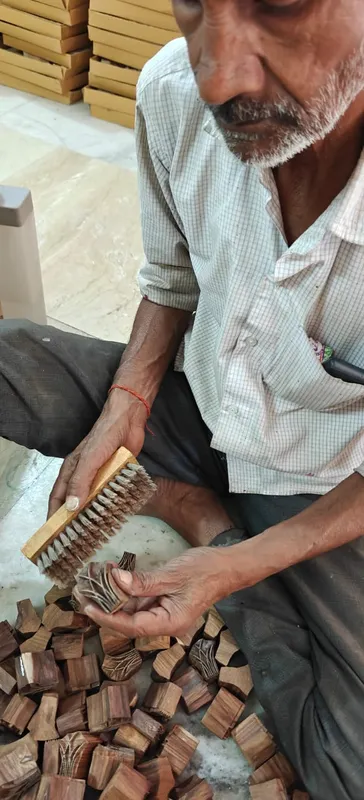
A machine cut block is uniform. A hand cut block has an edge that is very slightly alive, and that is what gives block printed cloth its character rather than the flat look of a screen print. The trade off is time. A detailed block can take a carver most of a day. We would rather sell you that block than a faster one.
The family behind it
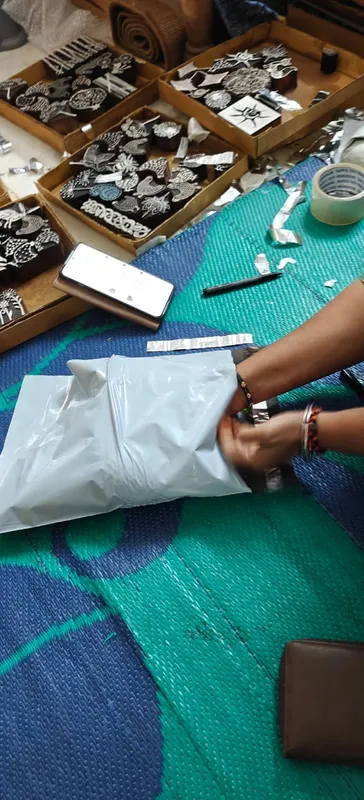
Ashish Rathore started WoodStampArt and runs the workshop. Our Etsy shop, Stampholiccrafts, is managed by Nisha Rathore, and it is where most of our international customers found us first. It holds a 4.8 rating there, built one order at a time over years of shipping blocks around the world.
This site is the same workshop, direct. Same blocks, same hands, same packing table.
What people print with them
- Textiles: cotton, linen and silk, with fabric dye or block printing ink.
- Pottery and ceramics: pressed into soft clay as a stamp or a mould.
- Paper: cards, wrapping, journals and lino style prints.
- Leather: pressed damp for a debossed impression.
- Batik and indigo work, where the block does the resist.
If you are starting out, one block, a flat surface and a scrap of cotton is genuinely all you need. Ink the face lightly, press with your body weight rather than a slap, and lift straight up.
Looking after a block
- Wipe the face clean while the ink is still wet, never let it dry in the cuts.
- Do not soak the block. A damp cloth and an old toothbrush are enough.
- Dry it flat, face up, away from direct heat.
- Store it somewhere dry. A block treated this way outlasts the person who bought it.
That last line is not a sales pitch. Some of the blocks in this workshop were cut by the generation before us and still print.
Print with the real thing
Every block in the shop is hand carved by the same artisans you just read about.
Browse the blocksComments
Sign in to leave a comment, react or like this article.